KATAKANA · カタカナ
Katakana: the complete chart, and the pairs that trip everyone
The same forty-six sounds as hiragana, written in an angular script built from straight strokes. Katakana carries the borrowed world — menus, brand names, packaging, station announcements — which makes it the script that pays you back fastest, and the one most learners quietly leave half-finished.
46 CHARACTERSSAME SOUNDS AS HIRAGANALOANWORDS1–2 WEEKS
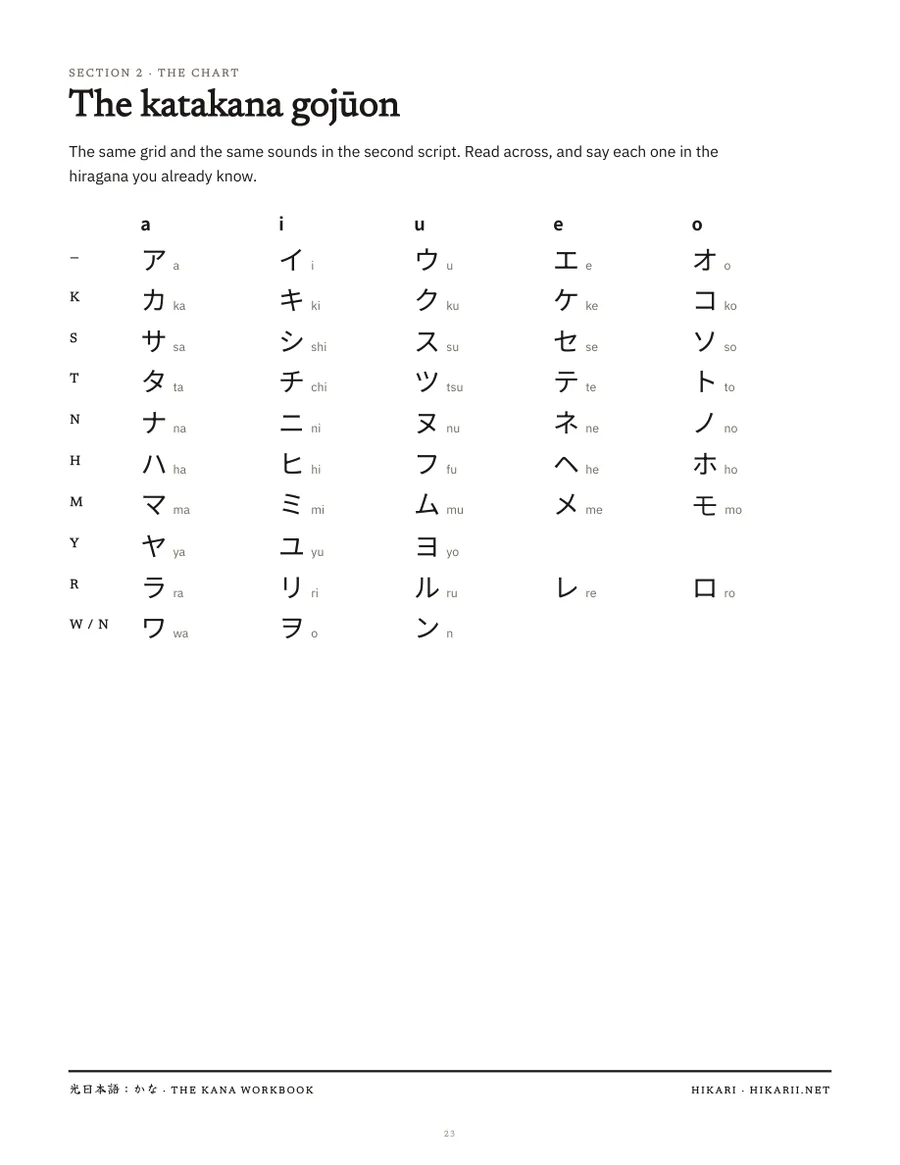
The katakana chart
The same grid as hiragana, in the same gojūon order: five vowels across, consonants down. Read each row aloud in the hiragana you already know — カ is the same ka as か — and you are relabelling sounds rather than learning new ones.
アa
イi
ウu
エe
オo
カka
キki
クku
ケke
コko
サsa
シshi
スsu
セse
ソso
タta
チchi
ツtsu
テte
トto
ナna
ニni
ヌnu
ネne
ノno
ハha
ヒhi
フfu
ヘhe
ホho
マma
ミmi
ムmu
メme
モmo
ヤya
ユyu
ヨyo
ラra
リri
ルru
レre
ロro
ワwa
ヲwo
ンn
The 46 basic katakana in gojūon order. ヲ is effectively archaic and you will almost never meet it.
Katakana is written with fewer, straighter strokes than hiragana, which is what makes it quick to write and easy to confuse. The differences between several characters come down to the angle and direction of one short stroke, so stroke order matters more here than anywhere else in kana.
The long-vowel bar
Katakana marks a long vowel with a bar — ー — instead of adding a second vowel character. The bar holds the preceding vowel for one extra beat, and the beat count changes the word.
- コーヒー kōhī — coffee. Four beats: ko–o–hi–i.
- ケーキ kēki — cake. Three beats.
- ビール bīru — beer. Three beats, and ビル without the bar is a building.
Written vertically, the bar is drawn vertically too. It is the single most common thing beginners drop when writing loanwords, and dropping it usually produces a real but different word.
Voiced forms and combinations
Nothing new to learn here — the marks behave exactly as they do in hiragana. Two strokes voice the consonant; a small circle on the H row makes a p.
ガga
ギgi
グgu
ゲge
ゴgo
ザza
ジji
ズzu
ゼze
ゾzo
ダda
ヂji
ヅzu
デde
ドdo
バba
ビbi
ブbu
ベbe
ボbo
パpa
ピpi
プpu
ペpe
ポpo
Contracted sounds work the same way too, and they do most of their work inside loanwords: ニュース nyūsu, ショップ shoppu, ジュース jūsu.
キャkya
キュkyu
キョkyo
シャsha
シュshu
ショsho
チャcha
チュchu
チョcho
ニャnya
ニュnyu
ニョnyo
ヒャhya
ヒュhyu
ヒョhyo
ミャmya
ミュmyu
ミョmyo
リャrya
リュryu
リョryo
ギャgya
ギュgyu
ギョgyo
ジャja
ジュju
ジョjo
ビャbya
ビュbyu
ビョbyo
ピャpya
ピュpyu
ピョpyo
The katakana that look alike
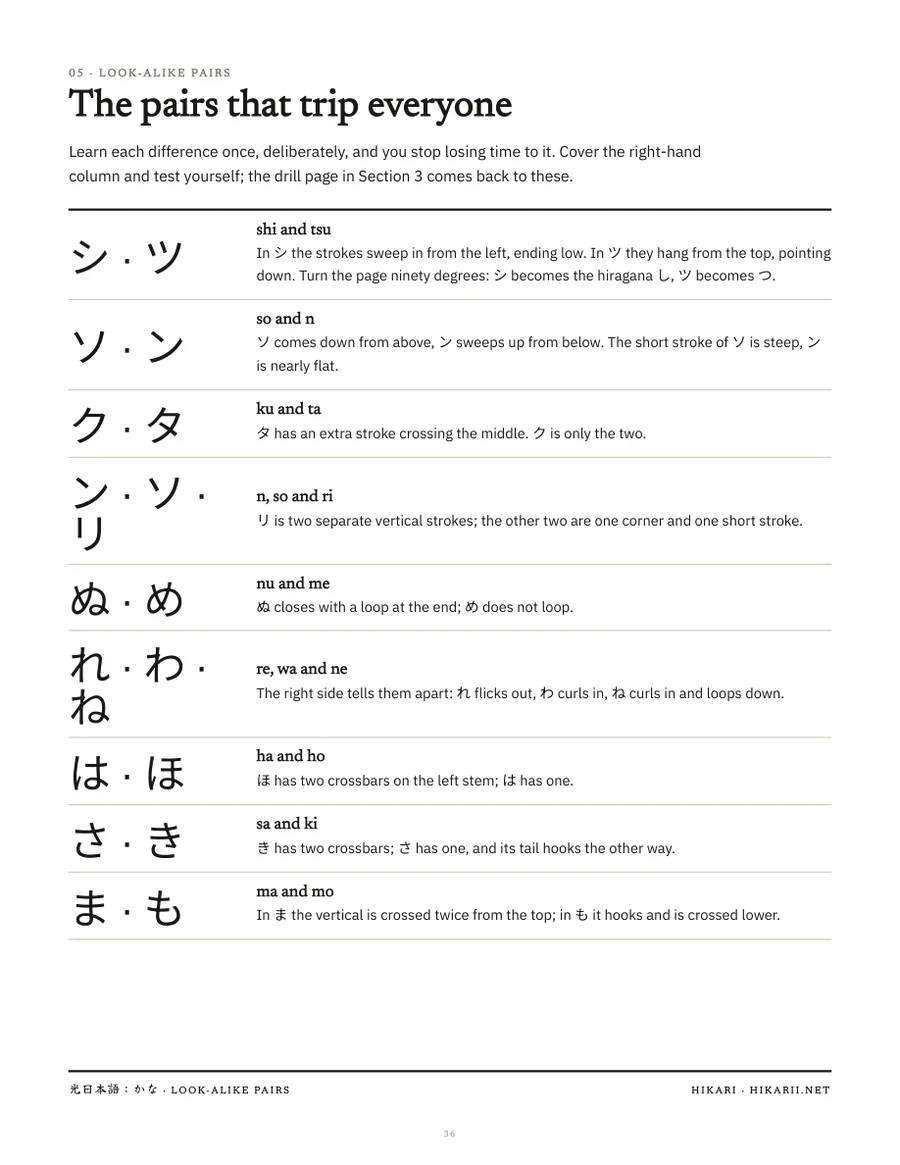
These four pairs cause more hesitation than the rest of the script combined. Learn each difference once, deliberately, and you stop paying for it every time you read a menu.
シ · ツ
shi and tsu
In シ the strokes sweep in from the left and end low. In ツ they hang from the top and point down.
Turn the page ninety degrees: シ becomes the hiragana し, ツ becomes つ.
ソ · ン
so and n
ソ comes down from above; ン sweeps up from below.
The short stroke of ソ is steep. ン is nearly flat.
ク · タ
ku and ta
タ has an extra stroke crossing the middle. ク is only the two.
Count strokes before you guess: two is ク, three is タ.
ン · ソ · リ
n, so and ri
リ is two separate vertical strokes. The other two are one corner and one short stroke.
If both marks run downward and never meet, it is リ.
The rotation trick is worth committing to memory: turn シ and ツ ninety degrees and they become the hiragana し and つ you already know. The direction the strokes travel is the whole answer — シ sweeps in from the left, ツ comes down from the top.
Read these before you finish the chart
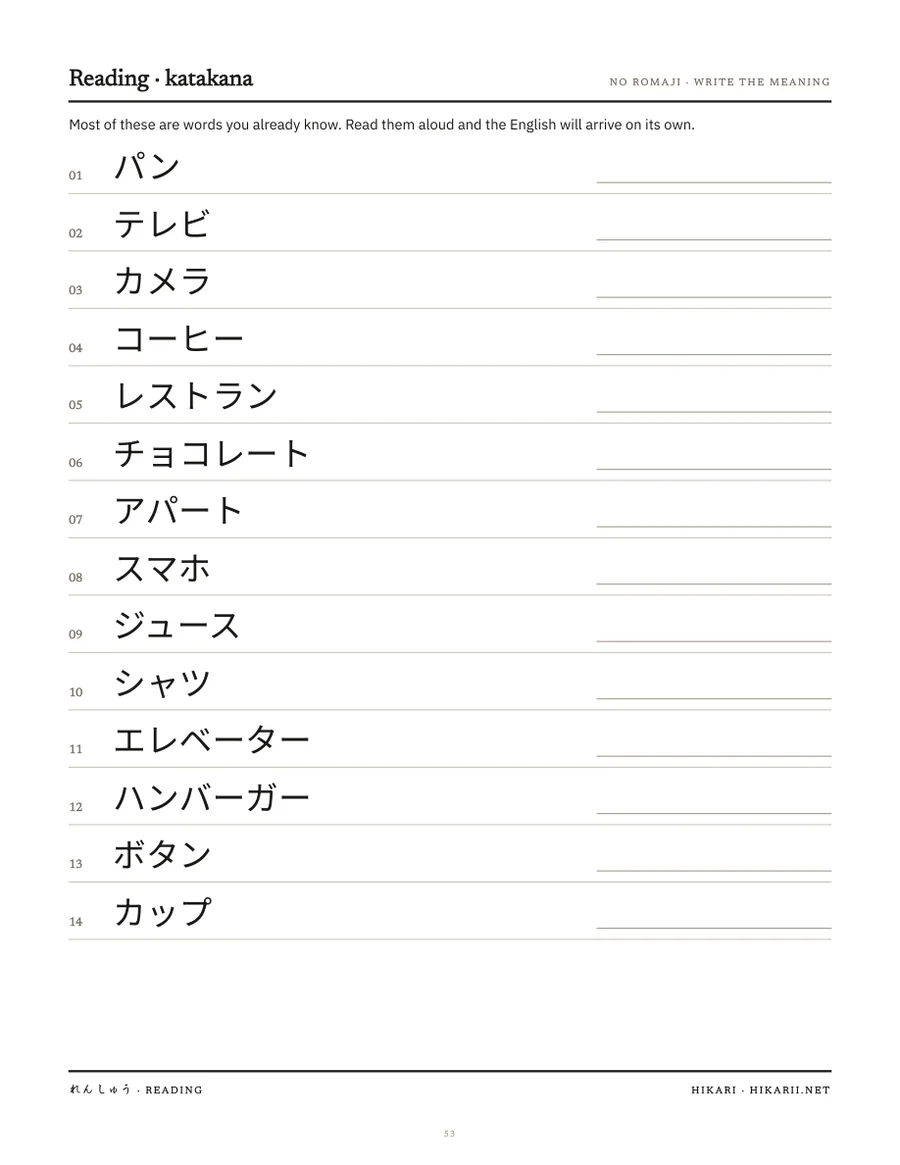
Most katakana words are words you already know wearing a Japanese accent. Say each one aloud at an even pace and the meaning usually arrives on its own — which is exactly why katakana is the fastest script to get an early win from.
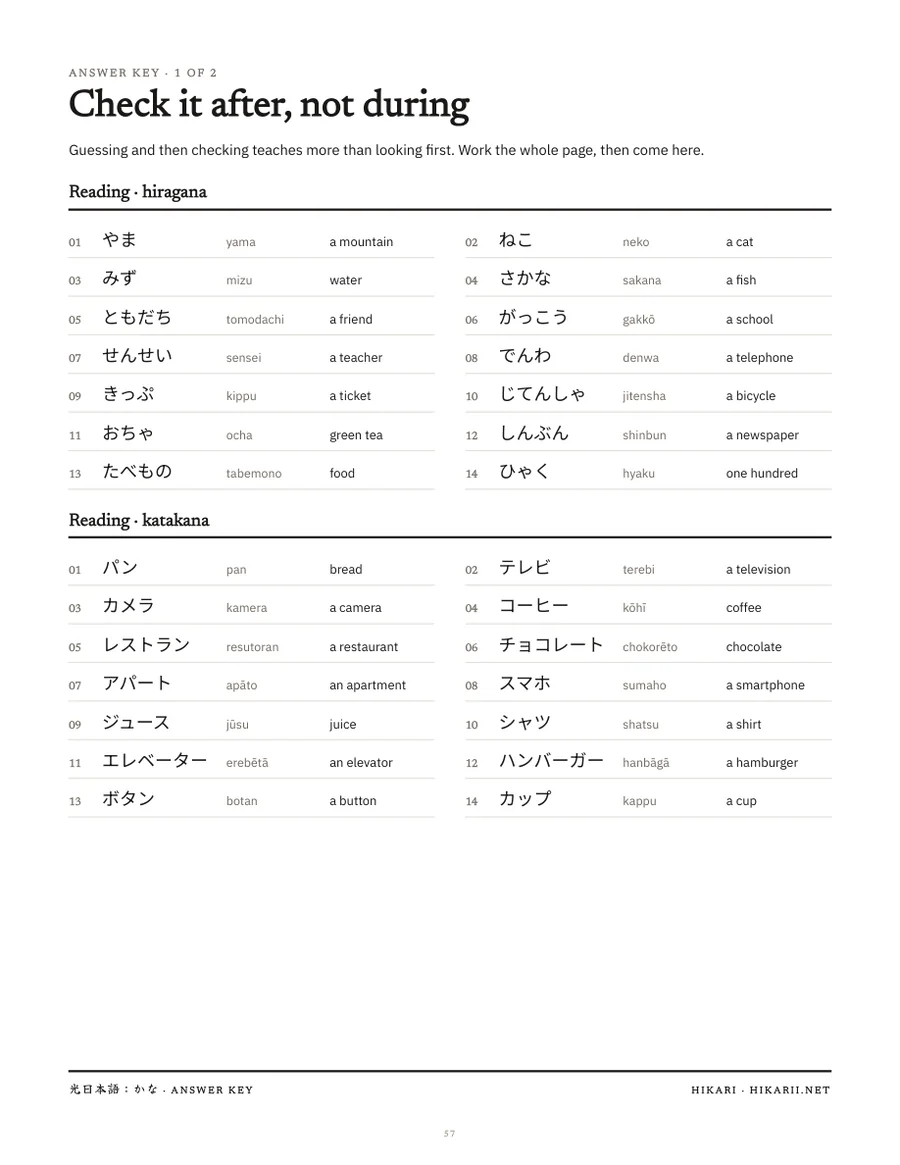
パン
pan
bread
テレビ
terebi
a television
カメラ
kamera
a camera
コーヒー
kōhī
coffee
レストラン
resutoran
a restaurant
チョコレート
chokorēto
chocolate
アパート
apāto
an apartment
スマホ
sumaho
a smartphone
Two patterns explain most loanwords. Japanese has no L, so every L becomes an R — エレベーター is erebētā. And Japanese shortens long borrowings aggressively: sumātofon becomes スマホ sumaho.
Writing your name in katakana
Names are transcribed by sound, not by spelling. Break the name into syllables, find the closest katakana for each, and remember that every consonant except ン must carry a vowel. A long vowel takes the bar. It is worth doing on paper once: it is the first genuinely personal thing you can write in Japanese.
FROM THE WORKBOOK
Katakana gets equal weight
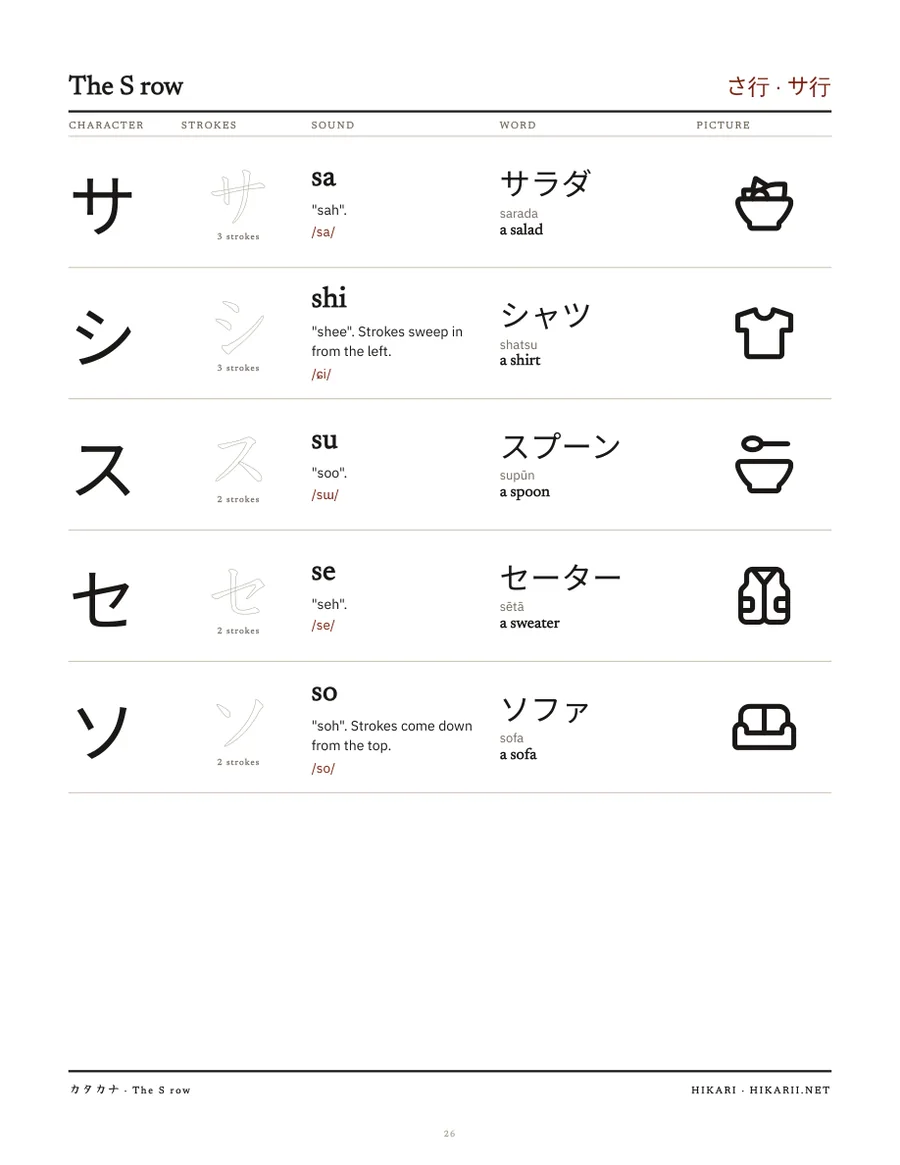
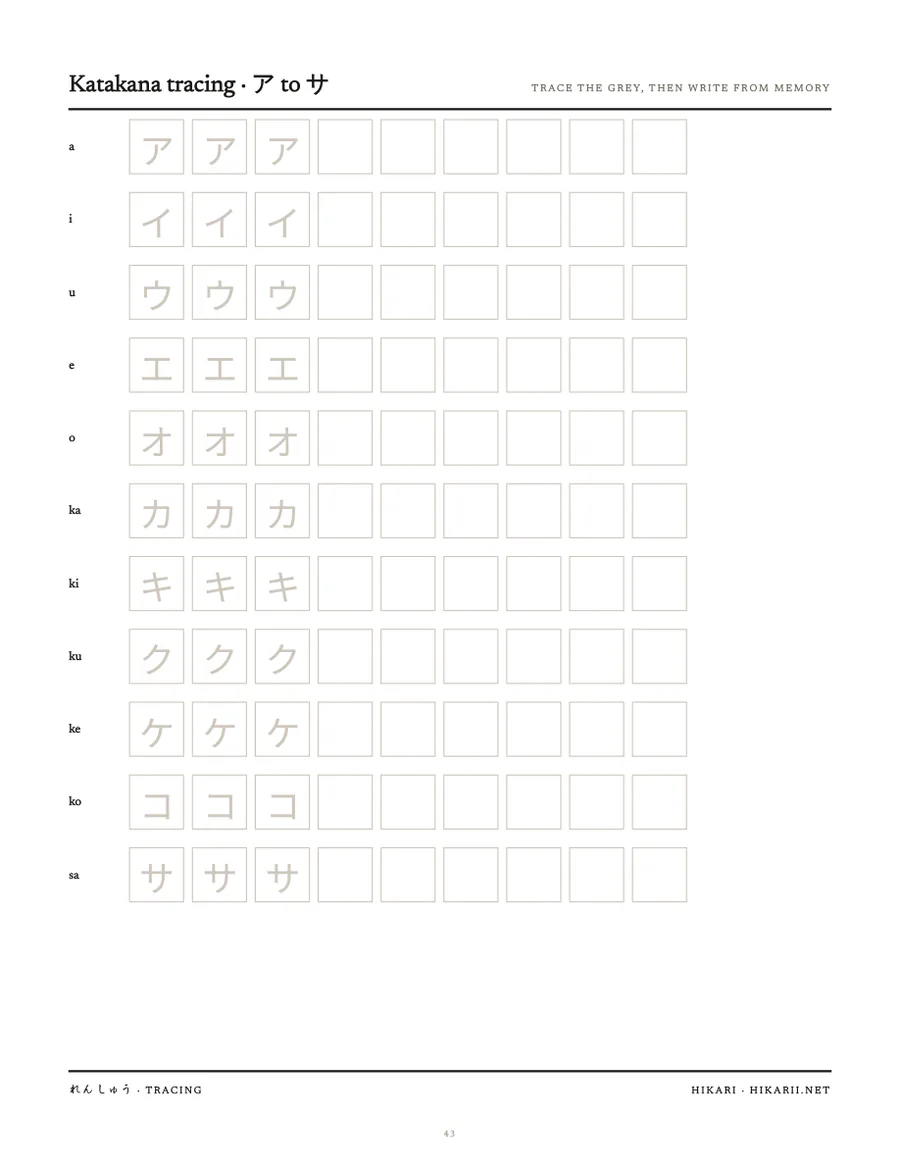
Most beginner material treats katakana as an appendix. These are real pages from the Hikari Kana Workbook, where it gets the same chart pages, the same tracing pages and the same reading drills as hiragana.
FREE · NO COST
Get the free Kana Starter Pack
Fifteen characters with pronunciation notes, real tracing pages, a mini reading quiz with answers and a progress tracker. A genuine slice of the workbook, at no cost.
QUESTIONS
Common questions about katakana
How many katakana characters are there?
Forty-six basic characters, the same count as hiragana and the same set of sounds. The voiced forms and contracted sounds work identically, so once hiragana is solid, katakana is a second costume for sounds you already know rather than a second alphabet.
Why is katakana harder than hiragana for most people?
Two reasons. Katakana is built from short straight strokes, so several characters differ by a single angle rather than by an obvious shape, and beginners see it far less often in beginner textbooks. The fix is deliberate practice on the look-alike pairs and reading real loanwords early.
What is katakana used for?
Borrowed words, foreign names, sound effects, scientific names and emphasis. In practice that means menus, packaging, brand names, station signs and product labels, which is why it is the script that pays back fastest if you are travelling or reading anything real.
What does the ー bar mean in katakana?
It stretches the preceding vowel for one extra beat. コーヒー is kōhī, four beats, not two. Hiragana marks the same thing by writing a second vowel instead, as in おう.
How do I write my name in katakana?
Japanese writes foreign names by sound, not by spelling. Break your name into syllables, match each syllable to a katakana, mark any long vowel with a ー bar, and remember that ン is the only consonant that can stand alone — every other consonant needs a vowel attached.
How do I tell シ and ツ apart?
In シ the two short strokes sweep in from the left and the long stroke ends low. In ツ the short strokes hang from the top and point downward. The reliable trick is to turn the page ninety degrees: シ becomes the hiragana し and ツ becomes つ.
Keep going
ONE WORKBOOK, ONE PRICE
Hikari Nihongo: Kana
All 92 characters across both scripts. Every voiced form, every combination, every look-alike pair untangled. Stroke order, tracing pages, handwriting grids, reading drills with no romaji, and a full answer key.
$9ONE-TIME · 60 PAGES · PDF
Instant downloadPrint it or use a tabletNo subscriptionYours forever
All sales are final for now: digital downloads cannot be returned after purchase.